
Sexually Transmitted Diseases
What is Sexually Transmitted Diseases ?
Sexually transmitted diseases (STDs) are caused by sexually transmitted infections (STIs). They are spread mainly by sexual contact. STIs are caused by bacteria, viruses or parasites. A sexually transmitted infection may pass from person to person in blood, semen, or vaginal and other bodily fluids.
Sometimes sexually transmitted infections are spread in ways other than sexual contact. For example, STIs can spread to infants during pregnancy or childbirth. STIs also can spread through blood transfusions or shared needles. STIs don’t always cause symptoms. A person can get sexually transmitted infections from another person who seems healthy and may not even know they have an infection.
Symptoms
- Sores or bumps on the genitals or in the oral or rectal area
- Painful or burning urination
- Discharge from the penis
- Unusual or odorous vaginal discharge
- Unusual vaginal bleeding
- Pain during sex
- Sore, swollen lymph nodes
- Lower abdominal pain
- Fever
- Rash over the trunk, hands or feet
Cause
Sexually transmitted infections can be caused by Bacteria, Gonorrhea, syphilis and chlamydia are examples of STDs that are caused by bacteria. Parasites, Trichomoniasis is an STD caused by a parasite. Viruses, STDs caused by viruses include human papillomavirus (HPV), the herpes simplex virus, and the human immunodeficiency virus (HIV), which causes AIDS.
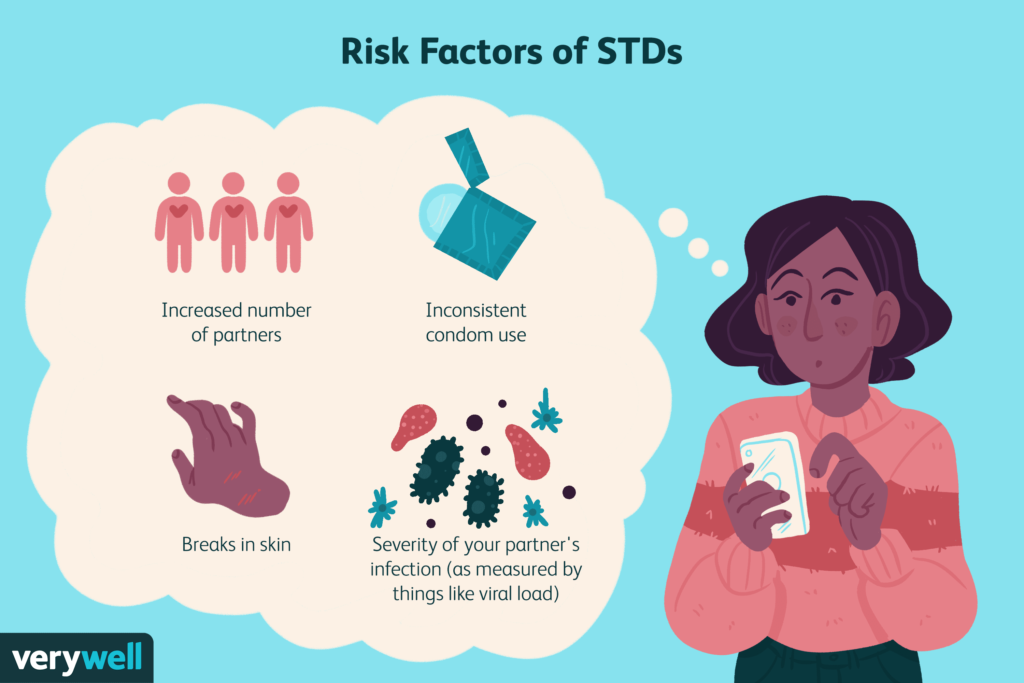
Risk Factors
If you’re sexually active, you’re at risk of developing a sexually transmitted infection (sexually transmitted disease). You can also get an STI if you share personal items like needles that contain your blood. This may occur in the following instances: Unregulated tattoos. Unregulated piercings. Sharing needles while using intravenous drugs (substance use disorder).
When to see a Doctor
See a health care professional immediately if you are sexually active and may have been exposed to a sexually transmitted infection. You have symptoms of a sexually transmitted infection. Make an appointment with a health care professional when you’re considering becoming sexually active or by age 21, whichever comes first. Before you start having sex with a new partner.