
Glomerulonephritis
What is Glomerulonephritis ?
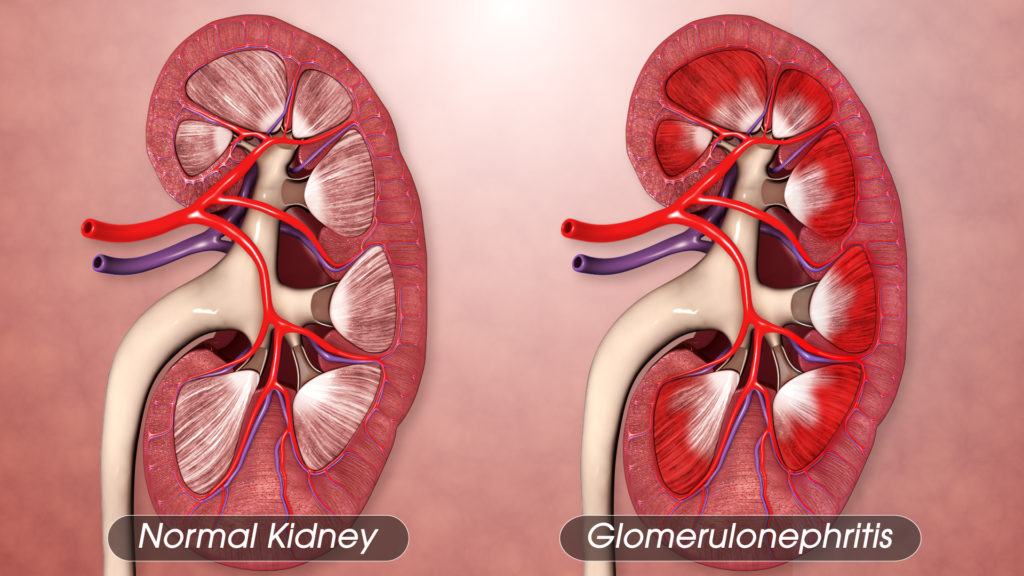
Glomerulonephritis (gloe-MER-u-loe-nuh-FRY-tis) is inflammation of the tiny filters in the kidneys (glomeruli). The excess fluid and waste that glomeruli (gloe-MER-u-lie) remove from the bloodstream exit the body as urine. Glomerulonephritis can come on suddenly (acute) or gradually (chronic).
Glomerulonephritis occurs on its own or as part of another disease, such as lupus or diabetes. Severe or prolonged inflammation associated with glomerulonephritis can damage the kidneys. Treatment depends on the type of glomerulonephritis you have.
Symptoms
- Blood in your pee. Urine may look brown, pink or red
- Nausea
- Rash
- Shortness of breath
- Pain in your joints or abdomen
- Peeing less often or more often than usual
- Swelling in your legs or face
- Pee that appears foamy or bubbly
- High blood pressure
- Jaundice
- Weight loss or loss of appetite
- Fatigue
Cause
The reason glomerulonephritis appears is often unknown. But causes may include A complication of bacterial endocarditis, an infection in your heart valves. A complication of infections like strep throat, HIV or hepatitis C. Problems with your immune system attacking healthy parts of your body, such as with lupus. Anti-GBM disease (formerly Goodpasture syndrome), a group of autoimmune diseases that affect your lungs and kidneys. IgA nephropathy, a kidney disease caused by a buildup of abnormal IgA antibody (immunoglobulin A). Rare diseases that inflame blood vessels like granulomatosis with polyangiitis (formerly Wegener’s disease), microscopic polyangiitis, Henoch-Schönlein purpura, or eosinophilic granulomatosis with polyangiitis (formerly Churg-Strauss syndrome). Genetics, meaning it runs in your biological family (this is rare). Certain types of cancer (like multiple myeloma).
Risk Factors
Not everyone with risk factors will develop glomerulonephritis. And, not everyone with the condition has a risk factor. But, the following are known risk factors A personal or family history of kidney disease. Taking certain medications. Exposure to specific toxins. Having certain viral infections (like strep) or bacterial infections (bacterial endocarditis). Having an autoimmune condition.
When to see a Doctor
Make an appointment with your health care provider promptly if you have signs or symptoms of glomerulonephritis.