
Dilated Cardiomyopathy
What is Dilated Cardiomyopathy ?
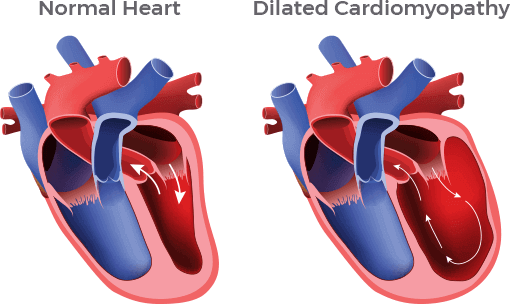
Dilated cardiomyopathy is a disease of the heart muscle that usually starts in your heart’s main pumping chamber (left ventricle). The ventricle stretches and thins (dilates) and can’t pump blood as well as a healthy heart can. Over time, both ventricles may be affected. The term “cardiomyopathy” refers to diseases that affect the heart muscle itself.
Dilated cardiomyopathy might not cause symptoms, but for some people it can be life-threatening. It’s a common cause of heart failure. Dilated cardiomyopathy can also lead to irregular heartbeats (arrhythmias), blood clots or sudden death. The condition can affect anyone, including infants and children.
Symptoms
- Palpitations or fluttering in your chest
- Shortness of breath (dyspnea)
- Swelling in your belly, legs, ankles and feet (edema)
- Unexpected weight gain from fluid retention
- Fast, fluttering or pounding heartbeat (palpitations)
- Chest pain
- Cough and congestion
- Dizziness or lightheadedness
- Fainting
- Fatigue (unusual tiredness)
Cause
It may be difficult to determine the cause of dilated cardiomyopathy. However, many things can cause the left ventricle to dilate and weaken, including Certain infections. Complications of late-stage pregnancy. Diabetes. Excessive iron in the heart and other organs (hemochromatosis). Heart rhythm problems (arrhythmias). High blood pressure (hypertension). Obesity. Heart valve disease, such as mitral valve or aortic valve regurgitation. Alcohol misuse. Exposure to toxins, such as lead, mercury and cobalt. Use of certain cancer medications. Use of illegal drugs, such as cocaine or amphetamines.
Risk Factors
Risk factors for dilated cardiomyopathy include Damage to the heart muscle from certain diseases, such as hemochromatosis. Family history of dilated cardiomyopathy, heart failure or sudden cardiac arrest. Heart valve disease. Inflammation of the heart muscle from immune system disorders, such as lupus. Long-term excessive alcohol or illegal drug use. Long-term high blood pressure. Neuromuscular disorders, such as muscular dystrophy
When to see a Doctor
If you are short of breath or have other symptoms of dilated cardiomyopathy, see your health care provider as soon as possible. Call your local emergency number if you have chest pain that lasts more than a few minutes or have severe difficulty breathing. If a family member has dilated cardiomyopathy, talk to your health care provider. Some types of dilated cardiomyopathy run in families (are inherited). Genetic testing may be recommended.