
Ovarian Cancer
What is Ovarian Cancer ?
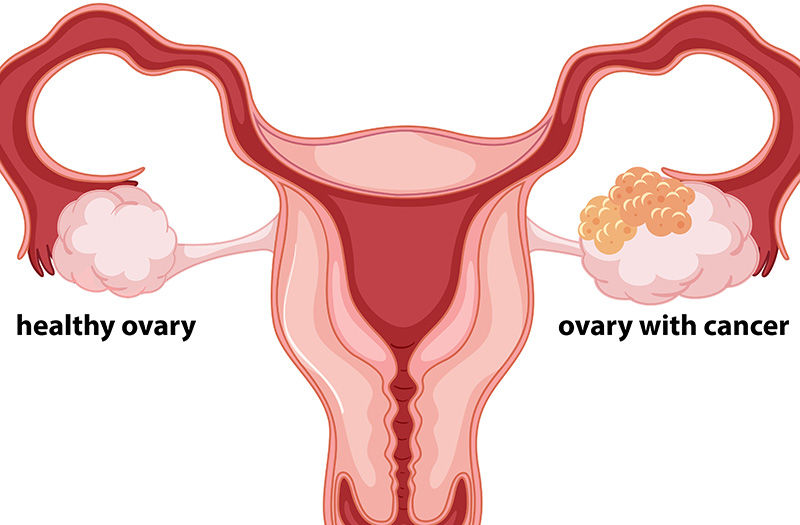
Ovarian cancer is a growth of cells that forms in the ovaries. The cells multiply quickly and can invade and destroy healthy body tissue.
The female reproductive system contains two ovaries, one on each side of the uterus. The ovaries — each about the size of an almond — produce eggs (ova) as well as the hormones estrogen and progesterone.
Ovarian cancer treatment usually involves surgery and chemotherapy.
Symptoms
- Abdominal bloating or swelling
- Quickly feeling full when eating
- Weight loss
- Discomfort in the pelvic area
- Fatigue
- Back pain
- Changes in bowel habits
- A frequent need to urinate
- An increase in the size of your abdomen
- Vaginal discharge
Cause
It’s not clear what causes ovarian cancer, though doctors have identified things that can increase the risk of the disease. Doctors know that ovarian cancer begins when cells in or near the ovaries develop changes (mutations) in their DNA. A cell’s DNA contains the instructions that tell the cell what to do. The changes tell the cells to grow and multiply quickly, creating a mass (tumor) of cancer cells. The cancer cells continue to live when healthy cells would normally die. They can invade nearby tissues and break off from an initial tumor to spread (metastasize) to other parts of the body.
Risk Factors
Factors that can increase your risk of ovarian cancer include Older age. The risk of ovarian cancer increases as you age. It’s most often diagnosed in older adults. Inherited gene changes. Genes cause a small percentage of ovarian cancer changes you inherit from your parents. The genes that increase the risk of ovarian cancer include BRCA1 and BRCA2. These genes also increase the risk of breast cancer. Several other gene changes are known to increase the risk of ovarian cancer, including gene changes associated with Lynch syndrome and the genes BRIP1, RAD51C, and RAD51D. Family history of ovarian cancer. If you have blood relatives who have been diagnosed with ovarian cancer, you may have an increased risk of the disease. Being overweight or obese. Being overweight or obese increases the risk of ovarian cancer. Postmenopausal hormone replacement therapy. Taking hormone replacement therapy to control menopause signs and symptoms may increase the risk of ovarian cancer. Endometriosis. Endometriosis is an often painful disorder in which tissue similar to the tissue that lines the inside of your uterus grows outside your uterus. Age when menstruation started and ended. Beginning menstruation at an early age or starting menopause at a later age, or both, may increase the risk of ovarian cancer. Never having been pregnant. If you’ve never been pregnant, you may have an increased risk of ovarian cancer.
When to see a Doctor
Make an appointment with your doctor if you have any signs or symptoms that worry you.